

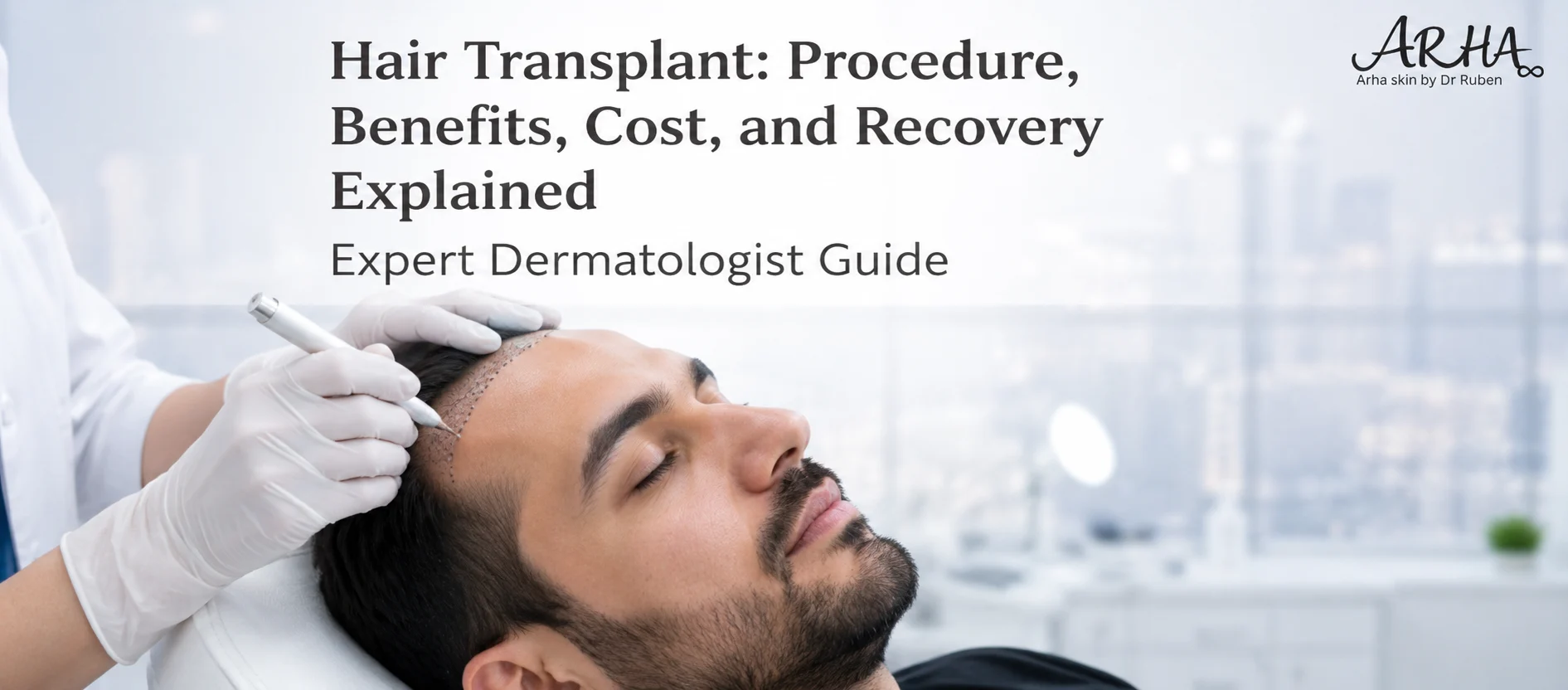
Hair loss can impact confidence, appearance and self-esteem. Thinning hair can be caused by genetics or hormonal changes. It may also be due to stress, medical conditions, or ageing. We at ARHA Skin by Dr. Ruben understand the emotional toll that hair loss can have on individuals and provide advanced solutions to help them restore their confidence and hair. Hair transplants are among the most effective, long-lasting and cost-effective treatments available today. They restore hair growth to areas that have been affected by baldness.
This guide will explain how hair transplants work, what they cost, and what you can expect when recovering.
What is a hair transplant?
A hair transplant is a minimally invasive surgical procedure that addresses hair loss by relocating healthy hair follicles from a donor site to the areas of the scalp experiencing thinning or baldness. The hair follicles that are transplanted continue to grow in their new locations, offering a permanent solution for hair loss.
Also Read: Hair Loss Treatment
Hair transplantation is a procedure that has undergone a significant evolution over the past few decades. It now offers natural-looking outcomes with minimal discomfort. Modern techniques allow for the precise placement of the hair follicles to create a more aesthetically pleasing and fuller hairline.
Who is a good candidate for a hair transplant?
The procedure is appropriate for those who:
- Male or female-pattern hair loss
- Hair loss that has stabilised
- Don’t forget to have enough donor hair on your scalp
- Are you looking for a permanent hair loss solution?
- Expect the best, but be realistic about your results
To determine eligibility and create a customised treatment plan, it is important to consult with a best dermatologist or specialist in hair restoration.
Also Read: How to Find the Best Dermatologist Near You Expert Tips for Skin and Hair Care
Hair Transplant Procedures
Modern hair transplantation uses two main techniques:
1. Follicular Unit Removal (FUE)
FUE is a popular and highly advanced method of hair transplantation. This procedure involves the extraction of individual hair follicles from the donor region and their transplantation into the bald or thinned areas.
The advantages of FUE
- Minimally invasive procedures
- No large linear scar
- Faster recovery
- Natural-looking results
- Short hairstyles are suitable for this product
FUE is a popular choice among many patients who are seeking hair restoration due to its precision and shorter downtime.
2. Follicular Unit Transplantation
The FUT procedure involves the removal of a strip from the donor region, which is usually the back of the scalp. The hair follicles will then be separated using a microscope and transferred to the recipient’s area.
The advantages of FUT
- Hair loss can be severe.
- In one session, a greater number of grafts may be harvested.
- Often more cost-effective for larger procedures
Hair loss severity, donor hair supply, lifestyle and personal goals are all factors that influence the choice between FUE or FUT.
Step-by-Step Hair Transplant Procedure
- Initial Consultation – A detailed consultation is the first step. The specialist will evaluate your scalp, hair loss patterns, medical history and expectations. The specialist then creates a customised treatment plan.
- Preparation – The donor and recipient sites are cleaned and prepped before the procedure. Local anesthesia will be administered to provide comfort during the entire treatment.
- Hair Follicle Extraction – The donor area is harvested using FUE or FUT.
- Graft Preparation – To maximise the survival rate, the extracted follicles will be carefully examined and prepared before implantation.
- Implantation – The recipient area is incised, and hair follicles are strategically placed according to the natural direction of hair growth and density.
- Post-Procedure Care – Patients receive detailed instructions on scalp care, medication, and follow-up visits for optimal healing.
Hair Transplant Surgery: Benefits
Hair transplantation has several advantages over temporary treatments for hair loss.
- Permanent Results – Contrary to topical solutions or temporary solutions that only last a few months, hair follicles transplanted continue to grow for many years. This results in long-lasting results.
- Natural Appearance – Modern techniques enable specialists to create natural-looking hairlines and patterns of density that blend seamlessly into existing hair.
- Confidence Improved – Restoring lost hair can have a positive effect on your self-esteem, social confidence, and personal image.
- Low Maintenance – After the hair transplant grows, you can wash, style, and cut it just like normal hair.
- Cost-Effective over Time – Hair transplantation is often more cost-effective than using products and treatments for years.
- Safety and Reliability – Hair transplants are highly successful and safe when performed by professionals.
What factors affect the price of hair transplants?
The cost of transplanted hair can vary depending on a number of factors.
- The number of grafts required – The cost of hair transplantation increases when patients have extensive hair loss.
- Technique Used – The cost of FUE may be higher than that of FUT, as it requires more precision and time.
- Experience of a Specialist – Due to their experience and expertise, dermatologists and hair restoration surgeons with high levels of skill and experience often charge higher fees.
- Clinic Facilities and Technology – Pricing can be affected by the use of advanced equipment, modern techniques and high-quality patient care.
- Geographic Location – The cost of hair transplantation can vary depending on where you live and the region in which the treatment is done.
Although prices may vary between clinics, it is more important to choose a provider based on expertise, safety and quality than solely cost.
Recovery after Hair Transplant Surgery
Most patients can return to their normal routines within a couple of days.
- First Few Days – Around the treated area, mild swelling, redness or tenderness can occur. These symptoms usually disappear quickly.
- First Week – Around the transplanted follicles, tiny scabs can form. Patients should not scratch or disturb the scalp.
- First Month – This is a normal and expected part of the hair growth cycle, also known as “shock loss”. This is not a sign of treatment failure.
- Three to six months – As the follicles begin their active phase of growth, new hair begins to appear.
- Six to Twelve Months – The final result is revealed as the hair continues to mature and thicken. During this time, many patients see significant improvement in appearance and density.
Tips for a Smooth Recovery
To achieve the best outcome possible:
- Please follow all instructions after surgery.
- Avoid strenuous exercises during the initial recovery phase
- Protect your scalp from direct sunlight exposure
- Avoid smoking and excessive alcohol consumption
- Take prescribed medication as directed
- Attend all scheduled follow-up appointments
Aftercare is crucial to the success of your treatment.
Conclusion
Hair transplantation is one of the most reliable and effective solutions available for those who are suffering from hair loss. Patients can achieve permanent, natural-looking results with advanced techniques like FUE and FUT. Making informed decisions regarding hair restoration requires that individuals understand the procedure, its benefits, costs, and recovery time.
Each hair restoration treatment at ARHA by Dr. Ruben is customised to meet the individual needs of each patient. Our team is committed to providing advanced technology, individualised care and exceptional results. We help individuals achieve fuller, healthier and more confident hair. Consultation with a specialist can help you achieve natural and lasting results.