

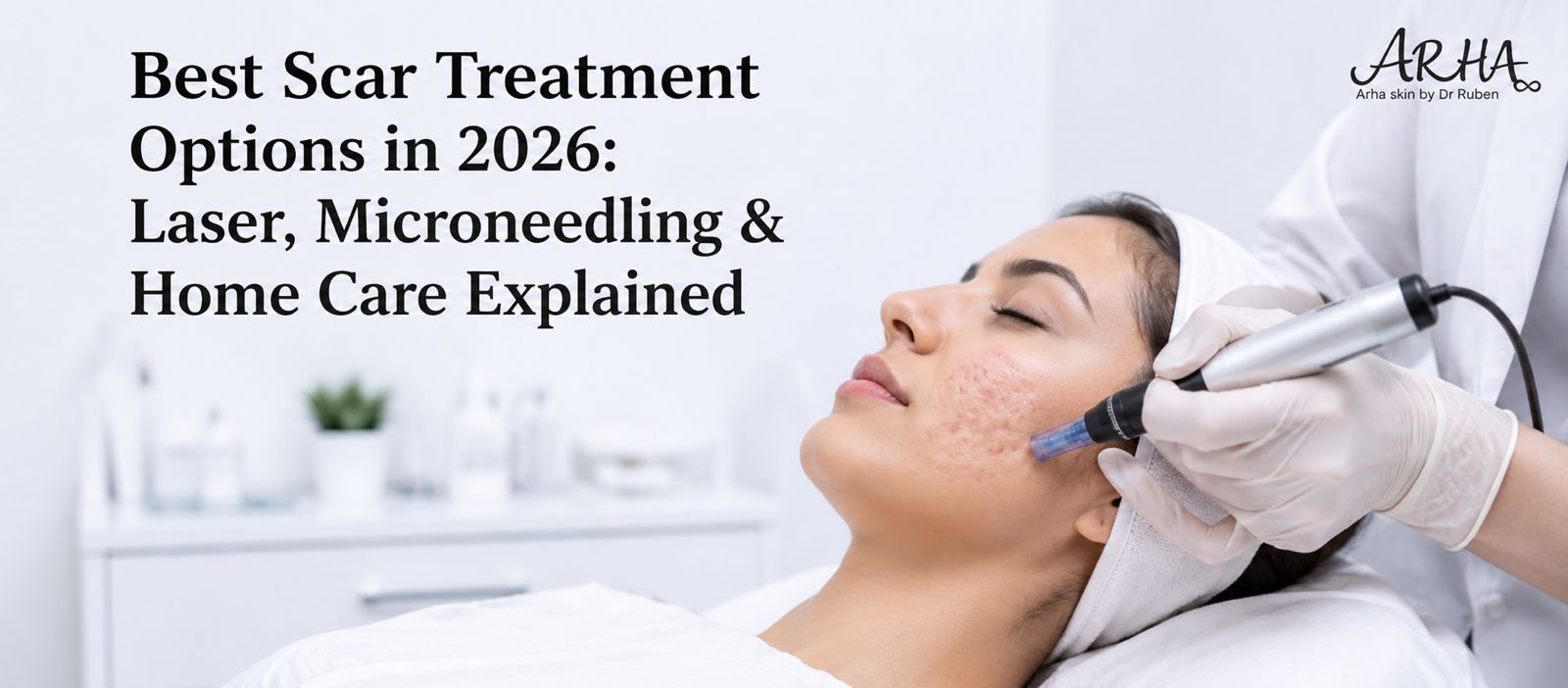
Scars are a natural part of the skin’s healing process, but they can affect confidence, especially when they appear on the face or other visible areas. Whether your scar is caused by acne, surgery, an injury, or burns, today’s treatment options are more advanced than ever. In 2026, dermatologists have access to modern technologies that can significantly improve the appearance of scars while reducing downtime.
The best scar treatment depends on the type, size, age, and location of the scar. Some people benefit from laser treatments, while others see better results with microneedling or a combination of professional treatments and proper home care.
Also Read: 2026 Acne Treatment
Understanding Different Types of Scars
Before choosing a treatment, it is important to identify the type of scar you have.
Atrophic scars: These are depressed scars commonly left behind by acne or chickenpox.
Hypertrophic scars: These are raised scars that remain within the boundaries of the original wound.
Keloid scars: These grow beyond the original injury and may continue enlarging over time.
Contracture scars: Usually caused by burns, these scars tighten the skin and may affect movement.
Different scar types respond differently to treatment, which is why a dermatologist’s evaluation is essential before starting any procedure.
Also Read: Acne Treatment
Laser Scar Treatment
Laser technology continues to be one of the most effective options for improving scars. It works by stimulating collagen production and resurfacing damaged skin, making scars smoother and less noticeable over time.
Benefits of Laser Treatment
- Reduces scar depth and texture
- Improves skin tone and pigmentation
- Stimulates natural collagen production
- Suitable for acne scars, surgical scars, and injury scars
- Delivers gradual, long-lasting improvement
Most people require multiple sessions, depending on the severity of the scar. Mild redness and swelling may occur after treatment but usually settle within a few days.
Laser treatment is especially effective for older scars that have become uneven or discolored.
Microneedling for Scar Reduction
Microneedling remains one of the most popular scar treatments in 2026 because it is minimally invasive and suitable for many skin types.
During the procedure, tiny sterile needles create controlled micro-injuries in the skin. This activates the body’s natural healing response and boosts collagen and elastin production. As new skin develops, scars gradually become softer and less visible.
Benefits of Microneedling
- Improves acne scars
- Smooths uneven skin texture
- Enhances skin firmness
- Has minimal downtime
- Safe for most skin tones
Several sessions are usually recommended for the best outcome. Results continue to improve over the following months as collagen production increases.
Combination Treatments Give Better Results
Many dermatologists now recommend combining different treatments instead of relying on a single procedure.
For example:
- Laser treatment plus microneedling for deep acne scars
- Microneedling with PRP to accelerate healing
- Chemical peels to improve pigmentation after laser sessions
- Injectable treatments for certain depressed scars
A personalized treatment plan often produces faster and more noticeable improvements than one treatment alone.
Home Care Still Matters
Professional treatments deliver excellent results, but daily skincare plays an important role in scar healing.
Protect Your Skin from the Sun
Sun exposure can darken scars and slow the healing process. Wearing sunscreen every day helps prevent pigmentation changes and protects newly treated skin.
Keep the Skin Moisturized
A healthy skin barrier supports healing. Using dermatologist-recommended moisturizers can improve skin recovery after professional procedures.
Use Scar Care Products
Silicone gels and silicone sheets may help flatten raised scars when used consistently. Your dermatologist may also recommend creams containing ingredients such as retinoids, niacinamide, or vitamin C depending on your scar type.
Avoid Picking the Skin
Picking acne, scabs, or healing wounds increases the risk of permanent scarring. Allow the skin to heal naturally to reduce future scar formation.
Which Treatment Is Right for You?
There is no single treatment that works for everyone. The ideal option depends on several factors, including:
- Type of scar
- Age of the scar
- Skin type
- Medical history
- Treatment goals
- Recovery time you can manage
A dermatologist can examine your skin and recommend the most effective treatment plan based on these factors.
What Results Can You Expect?
Scar treatments improve the appearance of scars, but they cannot completely erase them. Most patients notice smoother skin, improved texture, and a more even complexion after completing the recommended sessions.
Visible improvement often develops gradually because collagen remodeling takes time. Following aftercare instructions and completing the full treatment plan helps achieve the best possible outcome.
Conclusion
Scar treatment has advanced significantly in 2026, giving patients more effective and personalized options than ever before. Laser therapy, microneedling, and combination treatments can dramatically improve scar appearance when performed by experienced professionals. Along with proper home care and sun protection, these treatments help restore smoother, healthier-looking skin. If you have scars that affect your confidence, consulting a qualified dermatologist is the first step toward choosing the treatment that best suits your skin and achieving long-lasting results.