
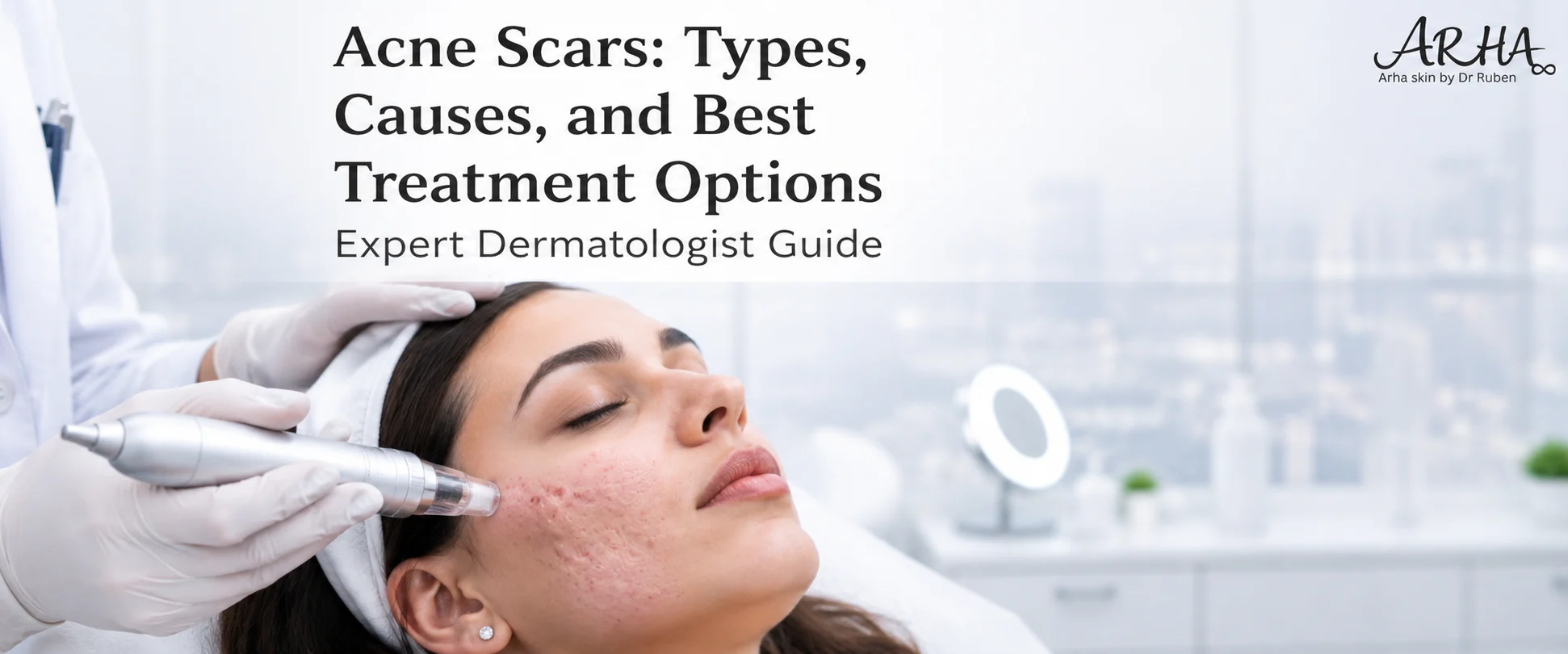
Acne is not a problem that ends when breakouts stop. Even after pimples heal, the scars can still affect self-esteem and confidence. ARHA by Dr. Ruben often encounters patients who are frustrated that, despite managing their acne, they still suffer from uneven skin texture and visible marks or indentations. Modern dermatology offers several solutions to help reduce acne scars and restore smoother, healthier skin.
The first step in choosing the best acne treatment is to understand what causes acne scars. A personalized approach is necessary to achieve the best results, since no two scars look exactly alike.
Why do acne scars form?
Acne scars form when the deeper layers of skin are damaged by inflammation. During an acne breakout, the clogged pores swell with bacteria, excess oil, and dead skin. The surrounding tissue can be affected by severe inflammation.
Collagen, a protein that is responsible for skin structure, is produced by the skin as it attempts to heal. Scars that are depressed or indented can occur when the body produces insufficient collagen. A surplus of collagen can cause raised scars.
Not all acne lesions leave a mark. The severity of acne and the delay in treatment can increase the risk of scarring.
Also Read: 2026 Acne Treatment : Advanced Medical Dermatological Solutions
Acne scarring: Common causes
Acne scars are caused by a variety of factors.
- Severe Inflammatory Acne – The risk of permanent scarring increases when deep cysts or nodules damage the skin’s supporting structure.
- Picking up and popping pimples – Squeezing acne lesions can increase tissue damage and worsen the inflammation.
- Delay Acne Treatment – Acne that is not treated can progress and cause repeated inflammation. Early treatment helps minimize skin damage.
- Genetic Factors – Due to the skin’s natural healing response, some people are more prone to scarring.
- Breakouts Recurring – Scarring is more likely to occur over time if you have frequent acne.
Also Read: Skin specialists in gurgaon
Acne Scars: Different types
One of the most common misconceptions about acne is that all scars look alike. There are actually several types of acne scars, and they may each require a different type of treatment.
Also Read: Acne Treatment: Effective Solutions for Clear and Healthy Skin
1. Ice Pick Scars
Ice pick scars can be described as deep, narrow indentations that extend into the skin. These scars look like tiny punctures and are considered to be one of the hardest types of acne scars.
As these scars are deep, it is often necessary to use specialized procedures in order to see a noticeable improvement.
2. Boxcar Scars
Boxcar scars are defined by their wide, well-defined depressions. Boxcar scars are most commonly found on the cheeks or temples, and they can cause an uneven texture.
Boxcar scars tend to be wider and shallower than icepick scars. This makes them more responsive to dermatological treatment.
3. Rolling Scars
The surface of the skin is characterized by a wavelike appearance. These scars are caused by fibrous bands pulling the skin down, causing irregular depressions.
Rolling scars can make the skin appear uneven in certain lighting conditions.
4. Hypertrophic Scars
Hypertrophic scars, unlike depressed scars that are recessed into the skin, are elevated above its surface as a result of excessive collagen production. Most commonly, these scars appear on the chest and shoulders.
Post-Inflammatory Hyperpigmentation
Many people confuse dark spots that remain after acne with scarring, even though they are technically not scars. These marks are caused by inflammation that triggers excessive pigment production. They can last for several months if not treated.
How do acne scars affect skin health and confidence?
Acne scars do not generally harm physical health but can have a significant emotional impact. Some people are self-conscious of their appearance and avoid public speaking, social situations, or photographs because they’re worried about their skin.
It is important not to underestimate the psychological impact of acne scarring. Cosmetic dermatology has made it possible to improve scars that have been present for a long time.
Acne Scar Treatment: Best Treatment Options
Treatment for acne scars is dependent on scar type, skin conditions, and personal goals. Dermatological assessment is necessary to determine the best approach.
Laser Resurfacing
Laser treatments for acne scars are very popular. The advanced laser technology stimulates collagen production to encourage skin renewal.
Over time, fractional lasers can reduce scar depth and smooth skin. The results continue to improve during the healing phase as collagen remodelling takes place.
Microneedling
Microneedling is the process of creating controlled micro-injuries on the skin with fine needles. This encourages the body to heal itself and collagen production.
This treatment is safe for all skin types and works well on mild to moderate atrophic marks.
PRP Therapy
Platelet-Rich Plasma therapy (PRP) is often combined with microneedling to improve healing and collagen production. Growth factors are derived from a patient’s blood and used to promote skin regeneration.
Many patients prefer PRP as it uses the body’s own natural healing capabilities.
Chemical Peels
By removing the damaged outer layers, chemical peels can improve acne scars and uneven skin texture. They also help with pigmentation problems. There are different peel strengths depending on the severity and type of skin concern.
Also Read: Chemical Peels for Glowing Skin
Subcision
Subcision is a specialized procedure often used for rolling scars. During treatment, a fine needle is inserted beneath the skin to release the fibrous bands that pull the skin downward. This allows the skin to lift naturally and creates a smoother appearance.
Dermal Fillers
Dermal fillers can temporarily improve certain depressed scars. Fillers create a smoother skin surface by adding volume to the area beneath scars. The results are usually immediate, but maintenance treatments may still be necessary.
Combination Treatments
Most patients get the best results by combining treatments, rather than just one procedure. Microneedling can be combined with PRP or laser resurfacing, followed by targeted scar treatment. Treatment plans that are tailored to the individual often result in more natural-looking and comprehensive results.
What results can patients expect?
Acne scars can’t always be removed. Modern dermatology has the ability to reduce their appearance. Most patients notice:
- Smoother skin texture
- Skin tone improvement
- Reduced Scar Visibility
- Collagen production is increased
- Confidence in appearance increases
The extent of improvement is dependent on the type, severity, and treatment used.
How to prevent future acne scars?
Early treatment of active acne is the best way to avoid acne scars. Simple preventive measures include:-
- Picking or squeezing pimples is not recommended
- Follow a dermatologist-recommended skincare routine
- If acne persists, seek professional treatment.
- Sunscreen daily is the best way to avoid dark spots from getting worse
- Treat breakouts as soon as possible before they become severe
Early intervention can reduce the risk of permanent skin damage.
Conclusion
Acne scars are a reminder of previous breakouts, but do not need to be permanent. Patients can make better decisions about their treatment by understanding the types of scars and the factors that contribute to them. Today’s dermatological treatments, from microneedling and laser resurfacing to PRP therapy or subcision, offer solutions that can improve skin texture and restore confidence.
Each acne scar treatment is tailored to each individual’s skin, scarring pattern, and aesthetic objectives. We use advanced technology, clinical experience, and a patient-centered approach to help our patients achieve healthier, smoother, and more confident-looking skin.